Payment methods have evolved from simple cash transactions into fast, secure, multichannel experiences that happen wherever and whenever customers are ready to buy.
For businesses, that shift has changed more than just how money is collected. It has reshaped customer expectations, sales processes, fraud prevention, and ultimately, conversion rates.
Understanding how payments have evolved helps businesses make better decisions about how they take payments today and where they need to adapt next.
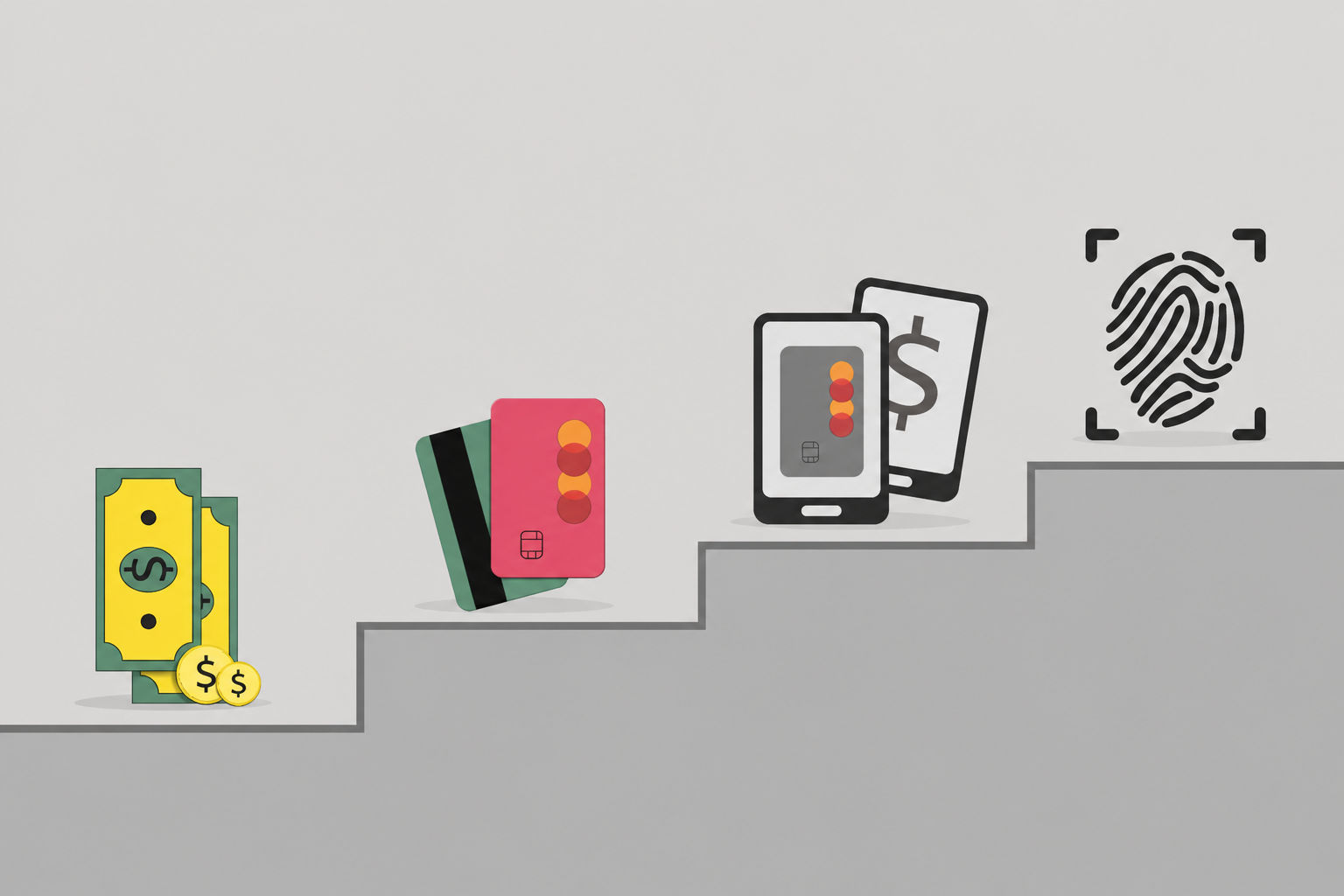
For decades, payments were built around physical exchange. Cash was simple, immediate, and widely accepted, but it came with limitations around scale, security, and tracking.
The introduction of card payments changed that.
Credit and debit cards allowed:
At the same time, they introduced new challenges around fraud, authentication, and processing infrastructure. These challenges still shape modern payment systems today.
As commerce moved online, payments followed.
Ecommerce introduced:
Customers gained convenience, but expectations also increased. Payments needed to be:
This period also saw the rise of contactless payments and mobile wallets, making transactions quicker and reducing friction at checkout.

The biggest change in modern payments is not just digital adoption. It is where payments happen.
Customers no longer follow a single path to purchase. They might:
Payments now happen across multiple channels, including:
This matters because payments now happen at the moment intent is highest.
If a business cannot take payment in that moment, the risk of drop-off increases significantly.
As payments have evolved, so has the need for security.
Modern payment systems are built around:
Customers expect their data to be protected, and businesses are contractually obligated to meet these standards.
At the same time, fraud has become more sophisticated. This has driven the adoption of:
Security is no longer a back-end consideration. It is a core part of the customer experience.

Modern payment expectations are clear.
Customers want:
To meet that demand, businesses need payment systems that:
A single-channel approach is no longer enough. Payment flexibility directly impacts conversion rates and customer satisfaction.
The evolution of payments is continuing to accelerate.
Key trends shaping the future include:
Direct account-to-account payments are reducing reliance on cards, lowering fees, and increasing speed.
AI is being used to:
Recurring payments, scheduled transactions, and automated workflows are becoming standard for many businesses.
The focus is on reducing the number of steps required to complete a payment, making transactions faster and more intuitive.
The way a business takes payments is now directly linked to its ability to convert enquiries into revenue, whether they're selling on social media, in person, by telephone or indeed any other channel. Delays, friction, or limited payment options create drop-off.
Flexible, secure, and accessible payment options increase:
Businesses that adapt to modern payment expectations are better positioned to compete, scale, and retain customers.
Platforms such as SOTpay bring these capabilities together in a single environment, allowing businesses to take secure payments across multiple channels without adding complexity.
By combining pay by link, multichannel delivery, Open Banking, and real-time visibility, businesses can align their payment process with how customers actually want to pay.
This article covers the key stages of payment evolution, but there is a much bigger picture behind how payments have developed and where they are heading next.
The full guide, written by SOTpay founder Jason Mace, explores:
Download the full guide: The Evolution of Payments, From Cash to Multichannel Commerce
Get a deeper understanding of how payments have changed and how to apply that knowledge to your business.


Need to ask a question: Request a callback from the team
Need merchant support? Visit Merchant Support